
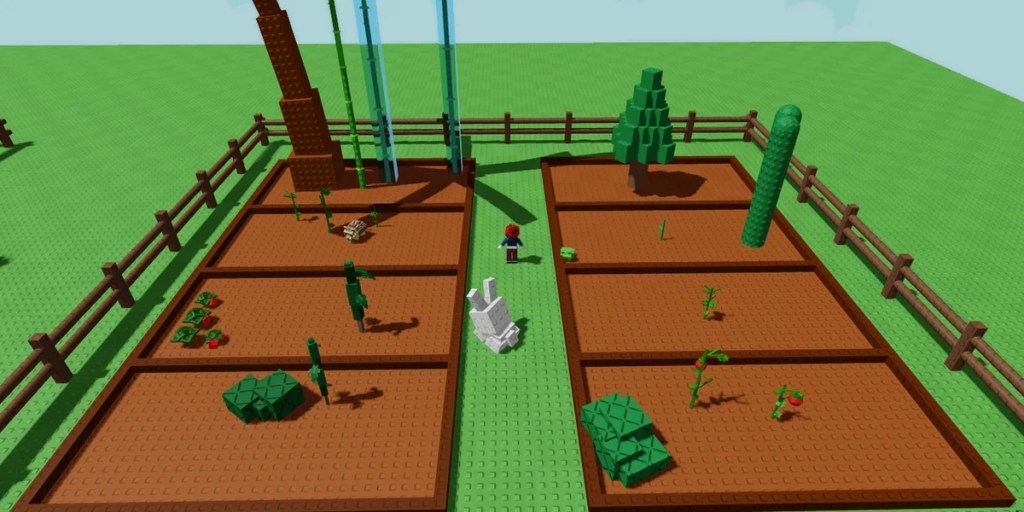
Video games often thrive on action-packed themes that keep players on edge, but one of the world’s most popular new games takes a much calmer approach. Grow a Garden, a simulation game available on Roblox, invites players to cultivate and nurture virtual gardens—a concept that has already captivated over 16 million players in a single weekend, surpassing records set by Fortnite.
A Growing Phenomenon
The game begins with a small patch of land where players can plant seeds, tend to their crops, and watch them flourish, even while offline. Once harvested, virtual produce can be sold for in-game currency called Sheckles, or, intriguingly, stolen from other players’ gardens.
The appeal of this tranquil experience isn’t lost on its young audience. Eric Watson Teire, eight, and his 10-year-old brother, Owen, from Edinburgh, are avid players. “It’s really fun,” Eric says. “We compete to see who has the best plant or the most Sheckles.”
With over 9 billion visits since its March launch, the game has become a global sensation, especially among children. According to Roblox, 35% of its players are aged 13 and under.
Critics and Curiosities
Not everyone is convinced by the game’s appeal. Some detractors describe it as “the equivalent of watching paint dry.” Yet for Eric and Owen, the game’s slower pace is part of its charm. “There’s a bit of patience to it,” Eric says.
Owen, who enjoys the competitive aspect, also finds the virtual produce fascinating. “Could there be a sugar apple—the best plant? Or will it just be a carrot, which is the worst?”
Players can speed up their progress using Roblox’s paid currency, Robux. Rare virtual items, like a mutated candy blossom tree or dragonfly, have even appeared on eBay for hundreds of pounds, illustrating the lengths some players will go to enhance their gardens.
The Real-Life Connection
Could virtual gardening spark a love for the real thing? Experts are divided.
Andrew K. Przybylski, a professor at the University of Oxford, is skeptical: “It’s unlikely this game will encourage real-world gardening any more than Super Mario Wonder encourages plumbing.”
Conversely, gardening podcaster and BBC presenter Thordis Fridriksson sees potential. “It taps into the same joy of planting seeds and watching them grow. Fingers crossed some players will try gardening at home.”
For Owen and Eric, their actual garden plays a role in their lives, but when asked which they prefer, Owen is firm: “Grow a Garden!”
The Broader Impact
Grow a Garden also highlights the influence of in-game economies on young players. Prof. Sarah Mills from Loughborough University notes, “Paid reward systems in games like this shape children’s experiences of gaming and their understanding of money. This can create challenges for families, altering the nature of pocket money.”
Regardless of whether it inspires real-world green thumbs, Grow a Garden has proven that even the gentlest gaming experiences can leave a significant impression.
 thetechtrident.com